
What is Dense Phase Pneumatic Conveying?
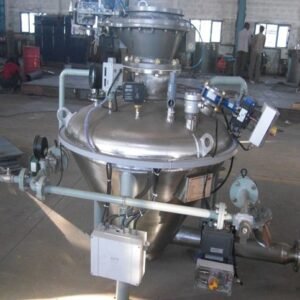
Dense phase pneumatic conveying transports materials at low velocities and high pressures. The material moves through the pipeline in plugs, dunes, or slugs rather than being fully suspended in the air stream.
How Dense Phase Conveying Works
In a dense phase system:
- Material enters a pressure vessel.
- Compressed air pressurizes the vessel.
- Material is discharged into the pipeline.
- The product moves slowly through the pipeline in concentrated batches.
Key Characteristics of Dense Phase Conveying
- Low conveying velocity
- High operating pressure
- Minimal product degradation
- Reduced pipeline wear
- Suitable for fragile and abrasive materials
- Lower dust generation
Common Applications
Dense phase systems are commonly used for:
- Cement
- Fly ash
- Alumina
- Silica
- Carbon black
- Plastic pellets
- Chemical powders
- Minerals
What is Dilute Phase Pneumatic Conveying?
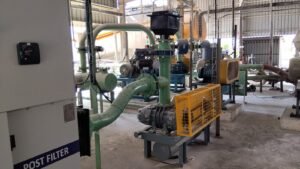
Dilute phase pneumatic conveying transports materials at higher velocities while keeping particles suspended continuously within the airflow.
This method uses lower pressure but higher air volume compared to dense phase systems.
How Dilute Phase Conveying Works
- Material enters the pipeline.
- High-velocity air stream suspends particles.
- Material remains airborne throughout transportation.
- Product reaches the destination continuously.
Key Characteristics of Dilute Phase Conveying
- High conveying velocity
- Lower pressure requirements
- Continuous material flow
- Simple system design
- Lower initial investment
- Suitable for free-flowing materials
Common Applications
Dilute phase systems are ideal for:
- Flour
- Sugar
- Grain
- Plastic granules
- Food ingredients
- Lightweight powders
- Non-abrasive materials
Comparison Table: Dense Phase vs Dilute Phase Pneumatic Conveying
Parameter | Dense Phase | Dilute Phase |
Velocity | Low | High |
Pressure | High | Low |
Product Damage | Very Low | Moderate |
Pipeline Wear | Low | Higher |
Dust Generation | Low | Moderate |
Initial Cost | Higher | Lower |
Maintenance | Lower | Higher |
Fragile Materials | Excellent | Limited |
Abrasive Materials | Excellent | Moderate |
Long Distance Conveying | Excellent | Good |
When Should You Choose Dense Phase Pneumatic Conveying?
Dense phase conveying is recommended when:
- Material is fragile
- Product degradation must be minimized
- Material is abrasive
- Long conveying distances are required
- Dust control is critical
- Maintenance costs must be reduced
Industries That Benefit Most
- Cement plants
- Power plants
- Glass manufacturing
- Chemical industries
- Mineral processing
- Petrochemical facilities
When Should You Choose Dilute Phase Pneumatic Conveying?
Dilute phase conveying is suitable when:
- Material is free-flowing
- Product breakage is not critical
- Initial budget is limited
- Short conveying distances are involved
- Simple operation is preferred
Industries That Benefit Most
- Food processing
- Agriculture
- Plastic manufacturing
- Packaging facilities
- General powder handling
Factors to Consider Before Selecting a Pneumatic Conveying System
Material Characteristics
Evaluate:
- Particle size
- Bulk density
- Moisture content
- Abrasiveness
- Fragility
Conveying Distance
Long-distance conveying often favors dense phase systems due to reduced wear and energy efficiency.
Throughput Requirements
Determine the volume of material that needs to be conveyed per hour.
Maintenance Requirements
Consider long-term operating costs rather than focusing only on initial investment.
Future Expansion
Choose a system that can accommodate future production increases.
Why Industries Prefer Dense Phase Conveying for Critical Applications
Many industries handling high-value or abrasive materials prefer dense phase conveying because it provides:
- Reduced product degradation
- Lower maintenance costs
- Longer equipment life
- Better dust containment
- Improved process reliability
Although the initial investment may be higher, the total cost of ownership is often lower over the system’s lifecycle.
Why Choose Scorpio Engineering BMH for Pneumatic Conveying Systems?
With over 40 years of experience in bulk material handling, Scorpio Engineering BMH specializes in designing and manufacturing customized pneumatic conveying solutions for diverse industries.
Key strengths include:
- 40+ years of engineering expertise
- 2,700+ successful installations
- Customized conveying solutions
- End-to-end project execution
- Nationwide industry presence
- Proven experience across cement, minerals, chemicals, power, and glass sectors
Whether you require a dense phase pneumatic conveying system or a dilute phase pneumatic conveying system, selecting an experienced manufacturer ensures long-term reliability and performance.