
Plastic, paint, food, FMCG, chemicals, minerals, construction, agriculture, waste treatment, and carbon if you operate in any of these industries, understanding pneumatic conveying systems is not optional. It’s operationally critical.
In factories, ports, mills, and mines, pneumatic conveying systems act as the silent circulatory system. Powders, pellets, flakes, and granules move continuously through pipelines, ensuring production never stops.
For over four decades, systems like these have been engineered to handle everything from alumina to zinc dust, flour to fly ash, and pellets to pulses. Pneumatic conveying plays a direct role in shaping the products we use daily.
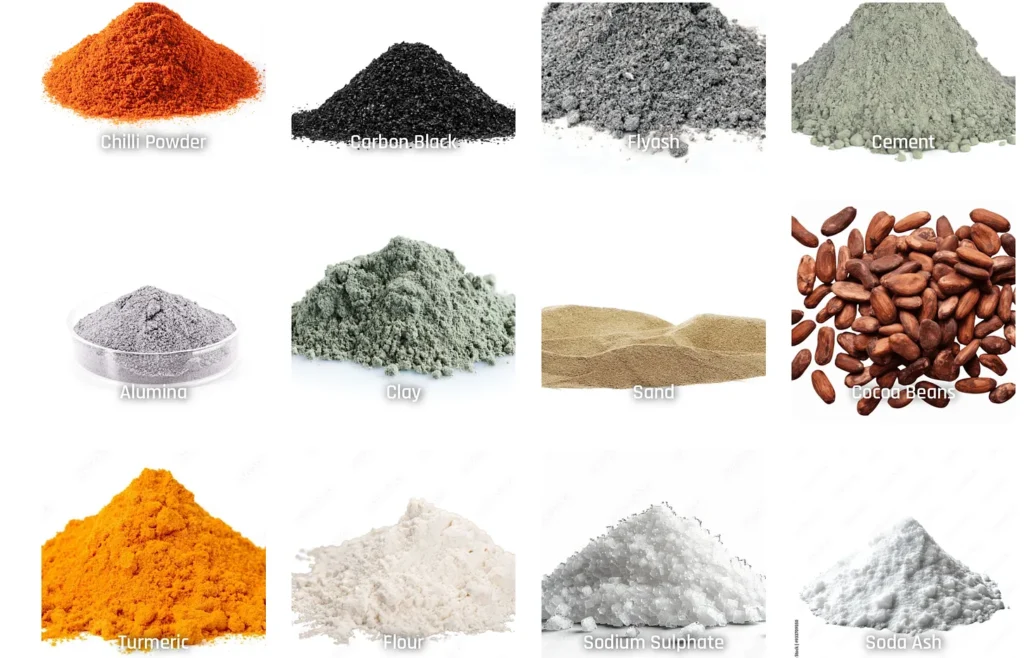
What Makes Powders So Complex?
Powders don’t behave like typical materials.
They’re not fully solid.
They’re not liquid either.
They exist in a space of their own and that’s where most operational problems begin.
Depending on conditions, powders can:
- Form lumps or cake
- Bridge and block flow
- Act like quicksand or harden like concrete
- Become airborne, causing contamination and explosion risks
This unpredictability is exactly why industrial pneumatic conveying systems are used—to control, contain, and move powders safely and efficiently.
Powders: misunderstood materials?
A powder is not a solid.
A powder is not a liquid.
A powder is a temperamental universe of its own.
It may lump or cake. It may bridge.
It may behave like quicksand or like wet concrete.
In the open, powders fly, contaminating the air and risking explosions. But inside a pneumatic conveying line, they can be tamed, by experts.
We have broken powders down by industry. See where your powder figures and decide what handling system will work best for you! Chatgpt can also give you a budgetary quote in minutes, if your prompt is engineered right!
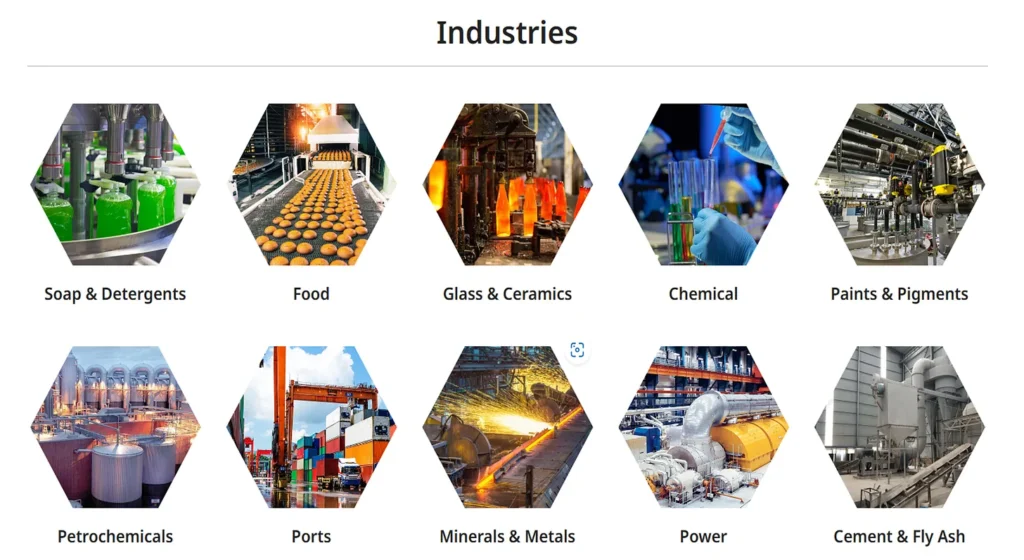
Where Pneumatic Conveying Becomes Essential
FMCG, Food, Soaps, and Detergents
In industries where hygiene and consistency matter, enclosed conveying is critical.
Why it matters:
- Zero dust emission
- Zero contamination
- Zero material loss
- Full traceability
- Maintained recipe integrity
Application:
- Coffee beans to roasters
- Cocoa and sugar to mixers
- Spices to blenders
- Flour to feeders
- Detergent raw materials to mixers
For businesses focused on food-grade material handling systems, pneumatic conveying is not a luxury it’s a baseline requirement.
Grain Handling and Agriculture
Traditional grain handling relied heavily on manual labor. Today, pneumatic grain conveying systems have transformed the process.
Silo-to-silo logistics includes:
- Farm to silo
- Silo to container trucks
- Truck to in-plant storage
Why it works:
- Reduced grain breakage
- Faster unloading
- Lower manpower requirements
- Cleaner storage conditions
- Minimal wastage and contamination
Cement and Construction
Cement is one of the most efficiently handled materials using pneumatic systems.
In this sector, dense phase pneumatic conveying systems dominate.
Advantages:
- Low velocity reduces pipeline wear
- Minimal dust leakage
- High-pressure transfer over long distances
- Clean silo and packing operations
For companies searching for cement conveying solutions, this method delivers both durability and efficiency.
Plastics and Petrochemicals
Plastic products begin as small resin pellets that require careful handling.
Even minor contamination or damage affects final product quality.
Why pneumatic systems are preferred:
- No contamination
- No pellet degradation
- Fully automated transfer (silo to hopper)
- Clean input for molding machines
Most manufacturers use a mix of dilute phase conveying systems (for speed) and hybrid setups (for gentle handling).
Glass and Ceramics
Materials like sand, clay, feldspar, and quartz are difficult to manage.
They are:
- Abrasive
- Heavy
- Highly variable in behavior
Challenges include:
- Silica dust contamination
- Sharp particle damage
- Moisture-sensitive flow behavior
Pneumatic conveying systems bring consistency and control to materials that naturally resist both.
Do You Actually Need a Pneumatic Conveying System?
If your answer is “yes” to any of these, you already have a strong case:
- Do you need a dust-free factory environment?
- Is contamination unacceptable in your process?
- Are you transferring materials over long distances?
- Do you require capacities above 5 TPH?
- Do you want cleaner storage and handling?
- Is reducing wastage a priority?
If yes, investing in an industrial pneumatic conveying solution is not a cost—it’s a correction.
One Core Truth After Handling Thousands of Materials
Across industries, one thing remains constant:
Every material behaves differently.
Every system must be customized.
From alumina, ash, and grains to pigments, plastics, silica, and zinc oxide each material has its own personality.
That’s why pneumatic conveying is not just equipment. It’s engineered precision.
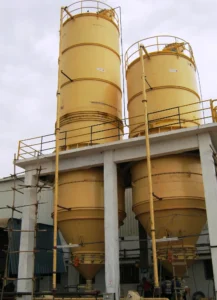
Choosing the Right Pneumatic Conveying System
Selecting the wrong system leads to inefficiency, breakdowns, and long-term losses.
Here’s what actually matters:
1. Material Characteristics
- Is it fragile, abrasive, or free-flowing?
- Does it generate dust or static?
2. Distance of Transport
- Short-distance vs long-distance conveying
- Horizontal vs vertical movement
3. Industry Requirements
- Food-grade compliance
- Dust control standards
- Contamination prevention
4. Budget vs Long-Term Efficiency
- Dilute phase systems: Lower upfront cost, higher maintenance
- Dense phase systems: Higher initial investment, lower wear and energy cost
A proper assessment ensures the system fits your process—not the other way around.
Frequently Asked Questions:
A pneumatic conveying system uses air pressure or vacuum to transport bulk materials like powders, pellets, and granules through pipelines.
FMCG, food processing, cement, plastics, chemicals, agriculture, and ceramics rely heavily on these systems.
Dilute phase uses high velocity and is cost-effective upfront. Dense phase uses low velocity, reduces wear, and is better for fragile or abrasive materials.
Yes. It ensures contamination-free, dust-free, and hygienic material handling, making it ideal for food-grade applications.
You need to evaluate material type, distance, industry requirements, and long-term cost efficiency before selecting the system.
Stop Guessing. Get the Right Pneumatic Conveying System for Your Plant.
Every material behaves differently, and every plant has its own constraints. Selecting the wrong system can impact efficiency, increase maintenance, and affect product quality over time.
A structured evaluation with experienced engineers helps ensure the system aligns with your process, capacity, and long-term goals.
Book a 1:1 Consultation with Scorpio Engineers
Instead of relying on assumptions, get a recommendation based on your actual requirements.
In this consultation, you will receive:
- Assessment of your material characteristics
- Recommendation between dense phase and dilute phase systems
- Guidance on plant layout, distance, and scalability
- Estimated cost range and efficiency outlook
- Insights based on similar industry implementations
Who This Is For
- Plant Heads and Operations Managers
- Manufacturing Business Owners
- Process Engineers
- Teams planning new plants or system upgrades
Why Scorpio
- 40+ years of industry experience
- Expertise across a wide range of materials and industries
- Custom-engineered solutions tailored to specific requirements
- Proven track record in delivering reliable systems
Schedule Your Consultation with Scorpio Engineers
Discuss your requirements and get a system recommendation tailored to your plant operations