Dense Phase Conveying · Energy Optimisation · Retrofit
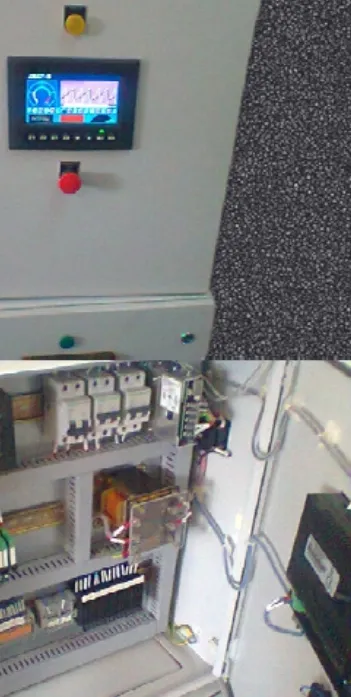
power OP is an electronic control unit that retrofits to any dense phase pressure vessel and makes it convey with the air it actually needs. It releases the conveying air in timed pulses, so material travels as short, separate plugs that need far less pressure to push. The same tonnage moves with less air and less compressor power: up to 30% lower power consumption per tonne conveyed.
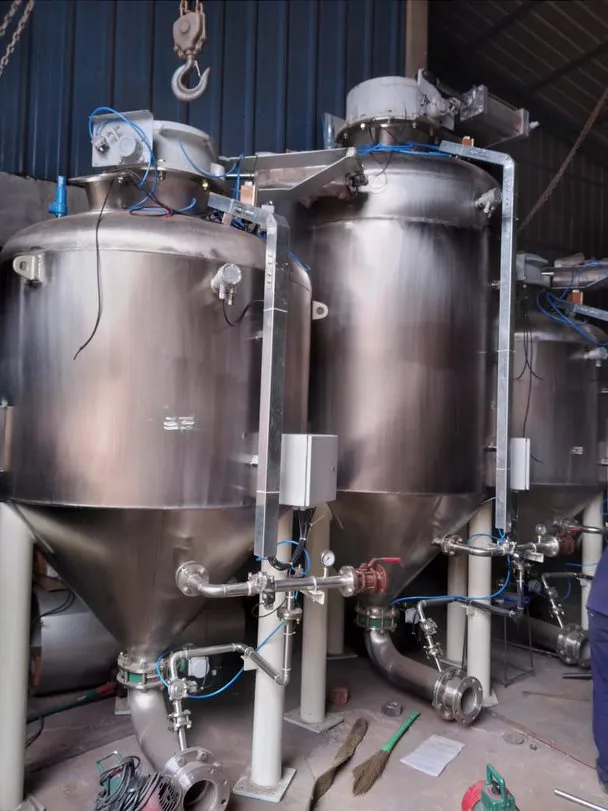
It fits into an existing dense phase system without major work, and comes as a built-in option on Scorpio’s powderPUMP modular dense phase conveyor.
From Scorpio Engineering BMH, builder of 1,552+ dense phase systems for 1,226+ clients since 1984.
Put simply: do you know how much power it takes to convey 1 tonne per hour of your powder over your conveying distance? Most plants don’t. If the answer to any of these is no, your system is very likely using more air, and more power, than the duty needs.
| Dense phase | Dilute phase | |
|---|---|---|
| Flow type | Non-suspension flow: material in air | Suspension flow: air in material |
| Phase density (kg material per kg air) | 10 to over 100 | Under 10, typically 4–6 |
| Conveying velocity | 3–10 m/s | 20–30 m/s |
| Conveying pressure | 2–6 bar | Up to 1 bar |
| Line sizes | 50–125 mm | 80–250 mm |
Pneumatic conveying has a reputation for being energy-hungry. In most cases that is a design problem, not a property of the method. Dense phase conveying moves dry bulk material through the pipe in a non-suspended flow, and the ratio of material to air decides how efficiently it uses energy.
When that ratio is wrong, the compressor supplies more air than the material needs, and every extra cubic metre of air is power paid for and wasted. The usual cause is a vessel that is simply filled, pressurised and opened, with nothing controlling the air once the valve opens.
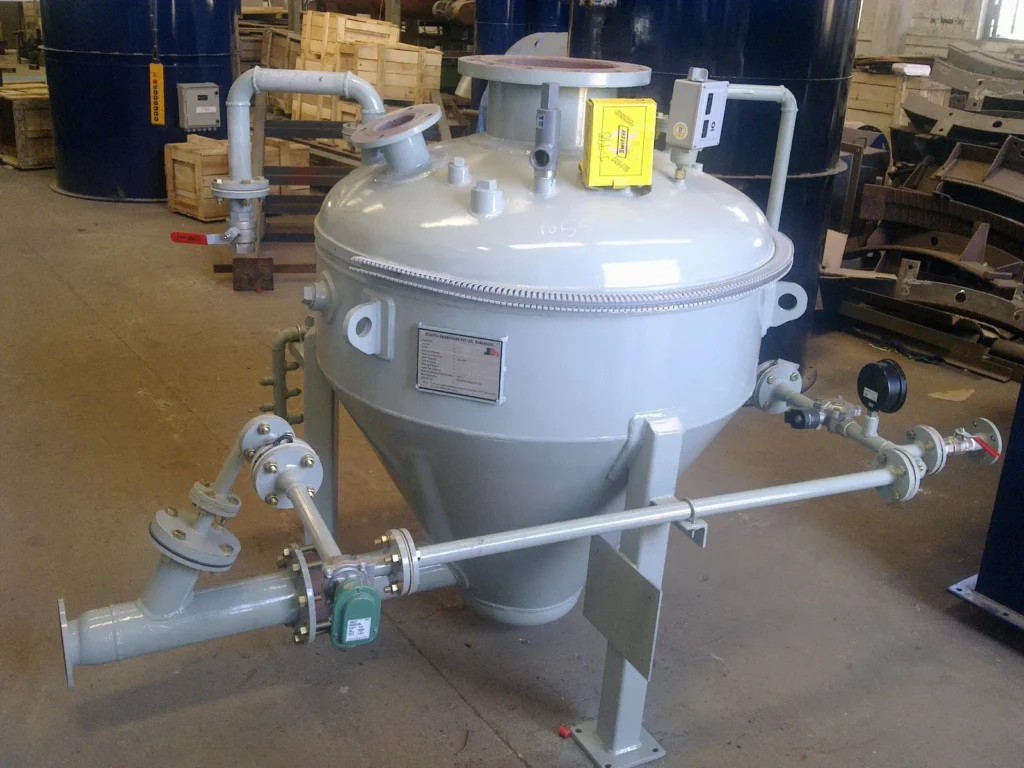
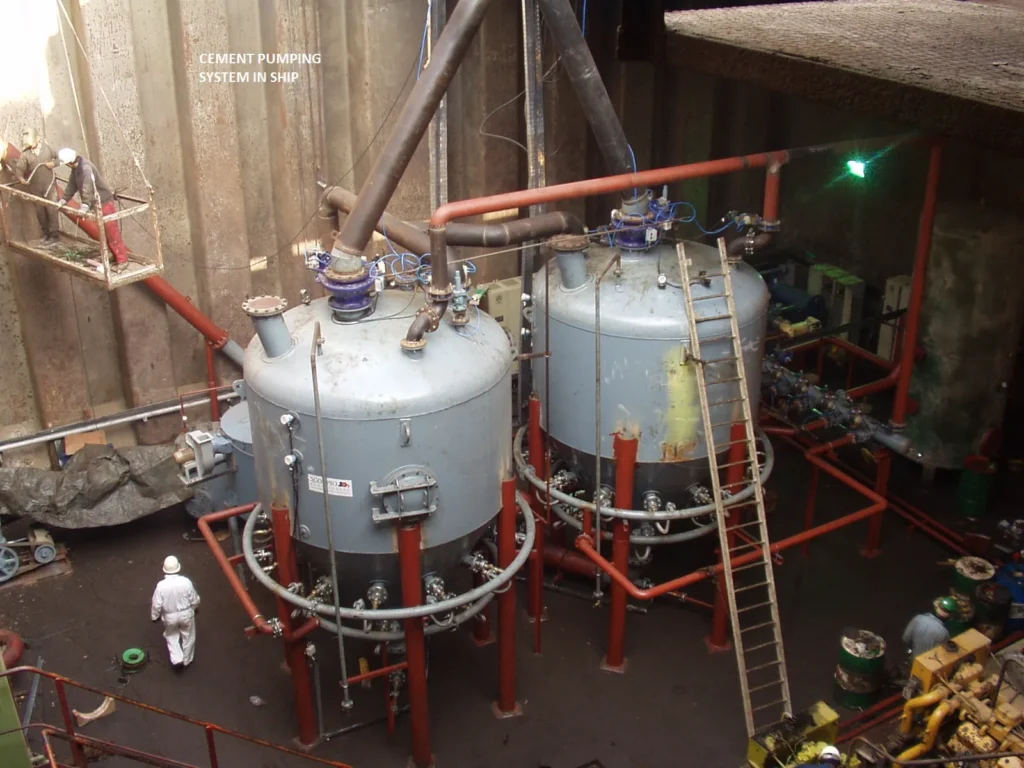
The vessel is filled with product and pressurised air, and the discharge valve below it opens. The whole mass of air and product bursts into the line at once, with heavy vibration, and blasts into the receiving vessel. The air has to push one long plug of material, which takes a high starting pressure.
The air leaving the vessel is controlled and stopped as it expands, in timed pulses. Each burst of air separates the material into a discrete plug, so the line carries a series of short plugs with air between them. Several short plugs need much less pressure to move than one long plug of the same total length, and lower pressure and less air mean less energy per tonne.
The power OP circuit lets you change the timing of the air pulses into the conveying line. That gives full control to find the best settings on site for the product being conveyed, the capacity and the conveying distance.
If you already run a dense phase system, Scorpio’s power optimisation program tells you exactly how much power your system needs for its duty, compared with how much it uses today. The difference is your saving. For plants that run dense phase conveying round the clock, a simple power optimisation can take up to 30% off operating costs.
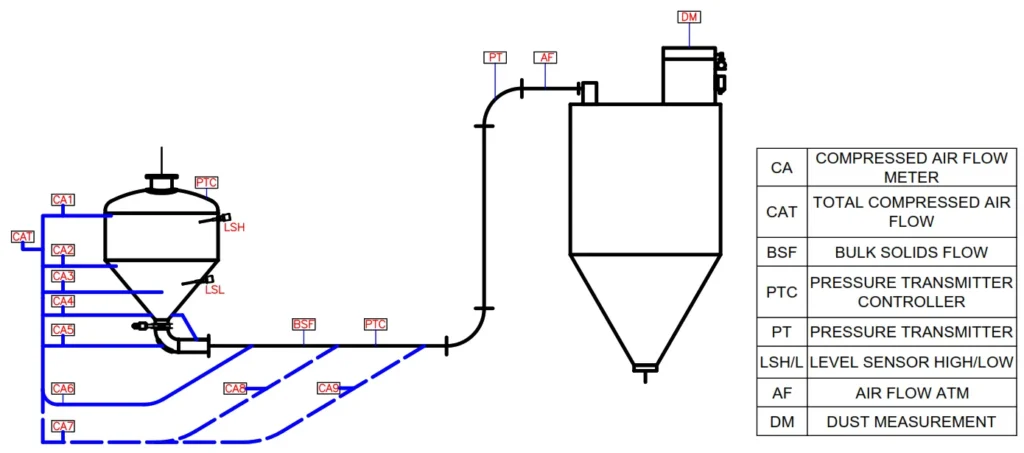
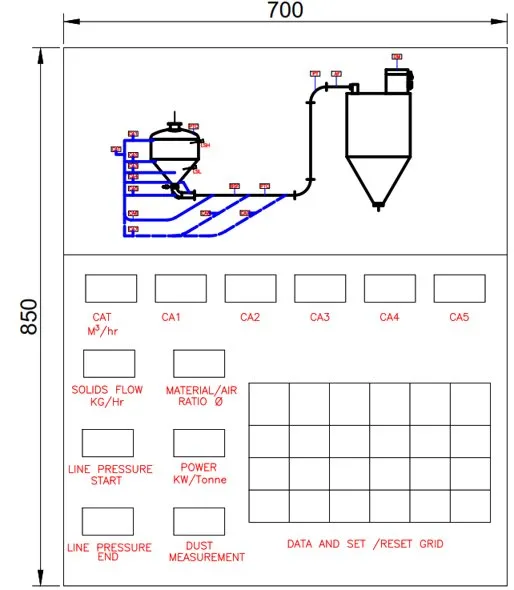
The program fits instruments and a data logging system to your conveying line, either permanently or for the length of an audit. Feedback loops from these instruments compute and log real-time power use against the material actually conveyed per hour. That is how power OP arrives at the exact air, and the exact power, your powder needs.
Material-to-air ratio and power in kW per tonne conveyed, so you can compare your system with what the duty needs and with what the rest of the industry uses for the same product.
Power optimisation starts from the same fundamentals used to design the system. A worked example for 30 t/h of a powder with a bulk density of 800 kg/m³:
| Capacity | Line | Air | Phase density |
|---|---|---|---|
| 370 t/h | 450 mm, 384 m, 9 bends | 288 m³/min at 2.8 bar | 21.4 |
| 320 t/h | 400 mm, 236 m, 5 bends | 288 m³/min at 2.5 bar | 18.5 |
| 600 t/h | 400 mm, 101 m, 4 bends | 432 m³/min at 3 bar | 23.14 |
Scorpio managing director Balan Velan presented this approach to dense phase power optimisation at the International Powder & Bulk Solids Conference & Exhibition in Chicago on 25 April 2023. Read the presentation on Learn Bulk.
It is a controller that manages the conveying air in a dense phase pneumatic system so the system uses only the air the duty needs. Scorpio’s power OP does this by pulsing the air into the line, which breaks the material into short plugs that need less pressure to move.
Up to 30% of the power used by a dense phase conveying system. The actual figure depends on how far the existing air use is from what the product, capacity and distance need, which the power optimisation program measures.
The pressure needed to push a plug of material rises with its length. Splitting the same quantity of product into several short plugs, separated by air, means each plug is pushed against a much smaller resistance, so the line runs at a lower pressure overall.
Yes. It is designed to retrofit to any dense phase pressure vessel with no major work to the existing system.
No. It is built for dense phase systems that use pressure vessels, where controlling the air pulses changes how the material forms plugs in the line.
Yes. The air pulse timing is adjustable on site, so it can be set for the product being conveyed, the capacity and the conveying distance.
Compressed air flow, bulk solids flow, line pressure at the start and end of the line, vessel levels and dust at the discharge. From these it logs the material-to-air ratio and the power used in kW per tonne conveyed, in real time. The instruments can be installed permanently or for an audit.
Dense phase conveying moves material as a non-suspended flow at 3–10 m/s and 2–6 bar, carrying 10 to over 100 kg of material per kg of air. Dilute phase conveying suspends the material in air at 20–30 m/s and up to 1 bar, with under 10 kg of material per kg of air.
Scorpio Engineering BMH Pvt. Ltd., a Bangalore-based pneumatic conveying manufacturer founded in 1984, with 1,552+ dense phase systems installed for 1,226+ clients.
Tell us your product, capacity and line length. We’ll tell you the power your duty actually needs.