
Scorpio BMH has designed and manufactured turnkey pneumatic conveying systems since 1984, delivering 2,700+ installations for clients including BASF, Cadbury, Asahi Glass, Air Liquide, and Bhabha Atomic Research Centre.
Open conveyors and leaky transfer points release fine particles into the plant atmosphere a housekeeping headache, a health hazard, and in combustible powders like sugar, flour, or aluminium, a genuine explosion risk.
Bearing failures, belt tears, and blockages on mechanical conveyors don't wait for a convenient shift. Every stoppage means lost production and an emergency maintenance call often at 2 AM.
Spillage at transfer points isn't just a mess it's raw material you paid for, sitting on the floor instead of in your finished product.
Mechanical conveyors have multiple moving parts, each one a wear item, each one a future repair bill. Energy draw is often higher than it needs to be for the actual tonnage moved.
. Without instrumentation, you only find out something's wrong after it's already cost you a shift. Plant managers are increasingly expected to show real-time data, not guesswork.
. For food, pharma, and specialty chemical plants, open material transfer is a contamination and compliance liability auditors and customers expect sealed, hygienic handling.
A correctly engineered pneumatic conveying system addresses every one of these which is exactly what the rest of this page covers.
A pneumatic conveying system is an enclosed material transport solution that moves dry bulk powders, granules, and pellets through pipelines using a pressurised or vacuum air stream, generated by a blower or compressor.
Unlike screw, belt, or bucket-elevator conveyors, a pneumatic system has no moving parts along the conveying pipeline material travels inside sealed pipes, making the process dust-free, hygienic, and fully automatable.
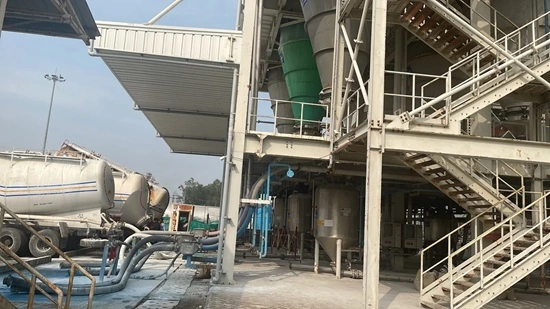
Positive Pressure Systems | Vacuum (Negative Pressure) Systems |
Air is blown into the pipeline from the feed end, pushing material toward discharge. Suited for one feed point to multiple destinations. Pressure typically 0.5–4 bar (g). | Suction applied at the discharge end pulls material from the feed point. Ideal for unloading bulk tankers, hoppers, or multiple pick-up points to one destination. Vacuum typically −0.3 to −0.8 bar. |
Not sure which configuration fits your application? Scorpio BMH’s engineers conduct free feasibility studies evaluating your material’s bulk density, particle size, moisture content, and abrasivity to recommend the most energy-efficient design.
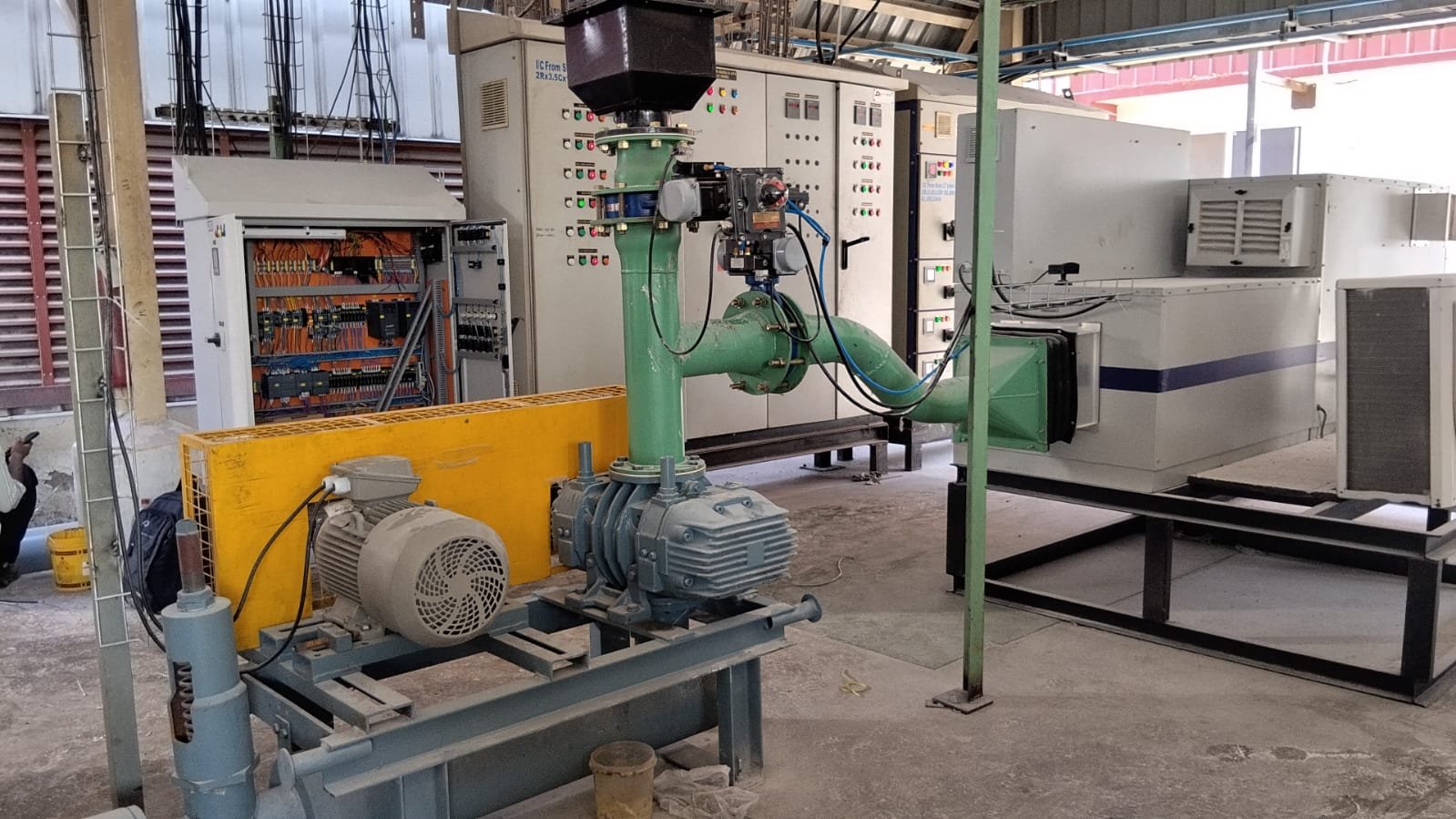
Dense phase conveying moves material at low velocity and high pressure in a moving bed, slug, or plug-flow pattern. The high material-to-air ratio makes it exceptionally gentle on fragile or abrasive powders.
Explore Dense Phase Pneumatic Conveying →
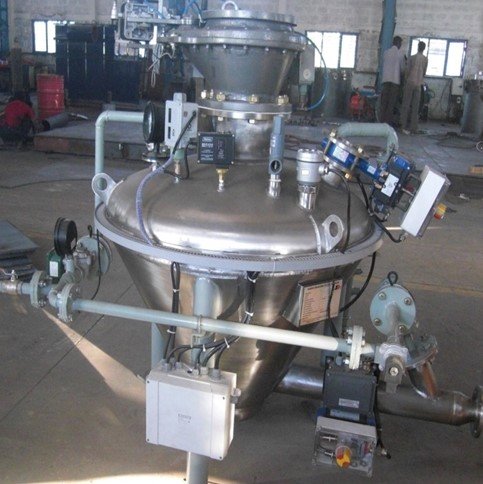
Also called lean phase or suspension flow, this method suspends particles uniformly in a high-velocity airstream at lower pressure — the most common, cost-effective conveying mode for free-flowing, non-abrasive materials.
Explore Dilute Phase Pneumatic Conveying →
| Parameter | Dense Phase | Dilute Phase |
|---|---|---|
| Velocity | 1–5 m/s | 15–35 m/s |
| Material Degradation | Minimal | Moderate |
| Pipeline Wear | Low | Moderate–High |
| Best For | Cement, fly ash, alumina, carbon black, plastic pellets | Sugar, flour, soda ash, plastic powder, light minerals |
| Capital Cost | Higher | Lower |
| Energy Efficiency | High (less air) | Moderate |
Dense phase conveying of cement, fly ash, raw meal, and clinker dust for silos and blending systems
Soda ash, titanium dioxide, carbon black, silica, sulphur, and specialty chemical powders
Sugar, flour, starch, salt, cocoa, milk powder in hygienic SS304 mirror-finish systems
API powders and excipients with GMP-compliant, fully enclosed conveying
Titanium dioxide, iron oxides, calcium carbonate, specialty pigments
Batch raw materials (silica sand, soda ash, feldspar, dolomite) for float glass and ceramic plants
With over four decades of dedicated expertise, Scorpio Engineering BMH Pvt. Ltd. is one of India’s most trusted names in pneumatic conveying and powder handling.
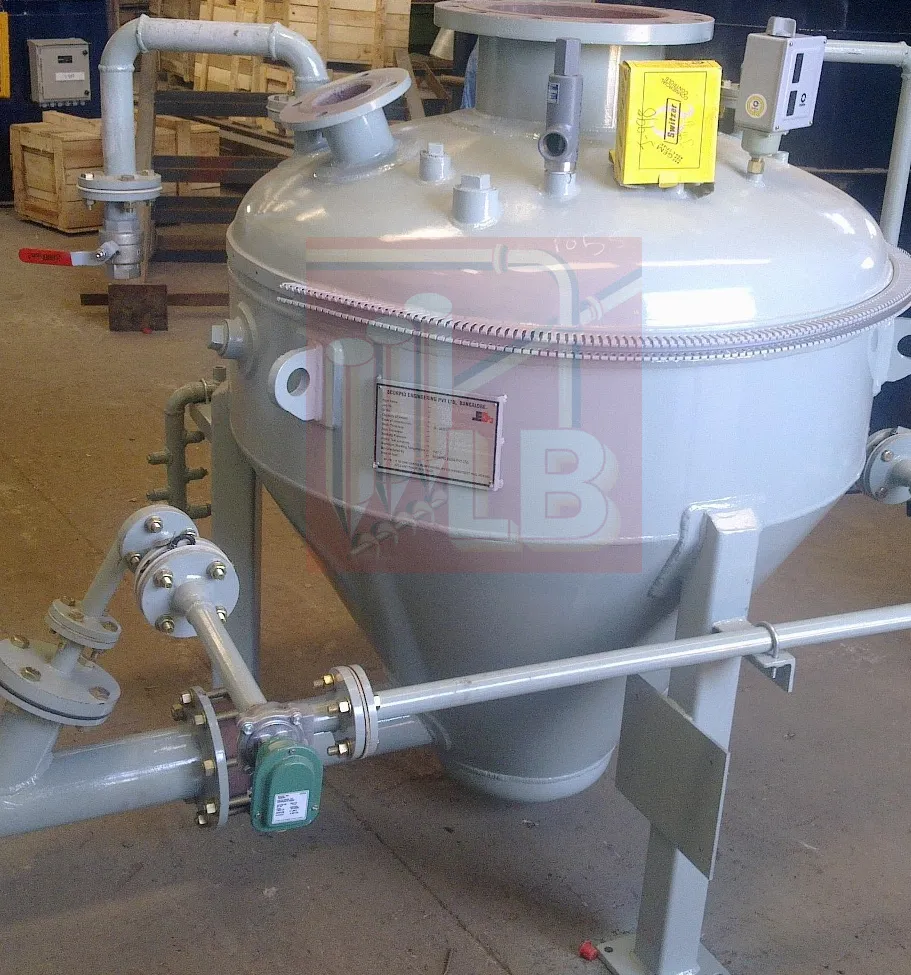
1200+ happy clients can’t be wrong. We like to let our hard work and results do the talking.

Pneumatic conveying handles a wide range of dry bulk materials, including cement, fly ash, carbon black, alumina, silica, sugar, flour, starch, salt, cocoa, milk powder, plastic pellets, titanium dioxide, soda ash, limestone, and pharmaceutical APIs. The key requirement is that the material be dry, free of lumps, and below approximately 6% moisture content.
Dilute phase systems are typically practical up to 300 metres. Dense phase systems can convey material over 1,000–1,500 metres, and in special high-pressure designs, even further depending on operating pressure, pipeline diameter, and material bulk density.
The right system depends on your material's bulk density, particle size, moisture content, and abrasivity, along with required throughput (TPH) and conveying distance. Scorpio BMH performs a free feasibility study and provides a detailed technical proposal, including system design, pressure drop calculations, and equipment list, at no cost.
Pipeline sizing requires knowledge of: required conveying rate (kg/h), material bulk
density, conveying distance and number of bends, target conveying velocity, and air
density at operating conditions. The calculation determines the minimum pipe bore to
achieve the target velocity and confirms the pressure drop stays within the air mover
capacity. Scorpio BMH performs detailed sizing calculations for every project at no
charge as part of the proposal process.